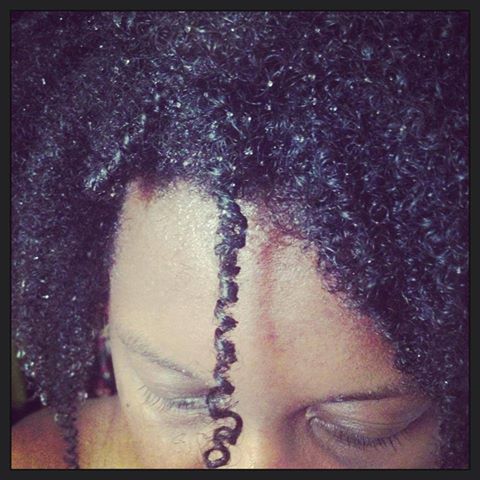
10 Tips on How To Detangle Natural Hair With Minimal Breakage (great for both kids and adults)11/3/2015
1. Detangle when you have two or three free hours, e.g. when you're watching TV.
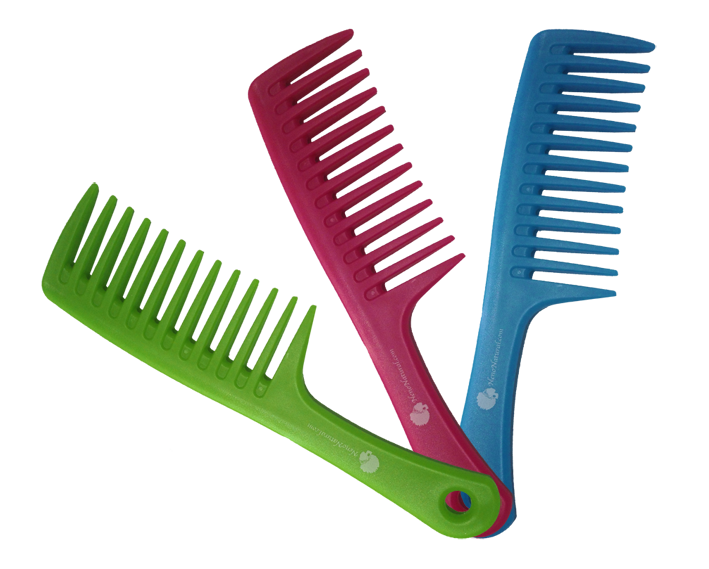
2. Do not detangle dry hair. Spray the hair with just water then add some detangling cream or a leave-in conditioner or even a rinse-out conditioner to soften the hair further, even if you're about to wash. You don't need much product, a little goes a long way. 3. Use a high quality wide tooth comb with smooth edges. 4. Don't detangle on an empty stomach, you're only going to rush and do it badly. 5. Move section by section. 4 to 12 sections should be enough depending on the thickness of your hair and how tangled your hair is. Even if I don't pin my hair up I don't attempt to work on all the hair in one go. I focus on one area at a time. 6. Ensure that your fingernails are well manicured and that you don't have any dry skin that hair will get caught on to. 7. Detangle with your fingers first. Fingers are better able to navigate knots. 8. Work your brush or comb from tips to roots. I have also discovered that finger-combing only is not for everyone. If you have very thick or course hair you need to use a comb and possibly a brush to some extent. Thin, fine and loosely curled hair fares much better on a finger-combing only routine. 9. Twist the detangled section so that it doesn't retangle or get mixed up with hair that has not yet be detangled. 10. Always detangle before you shampoo hair and then again after you have applied conditioner. Remember that damaged hair is more prone to breakage than healthy hair so handle weak and damaged hair with extra care :)
This is one issue you may not have thought about before. When hair is wet, it’s very elastic and can stretch out much further than it can when it is dry.
As hair dries, it shrinks back to its normal length. This is a problem if you style your hair into a fixed style while it’s wet. Ponytails / Buns / Puffs For example, if you pull your natural hair into a ponytail, bun or puff while it’s wet in a way that it can’t shrink back easily then as the hair dries and shrinks it could pull on the edges so much that the roots are weakened and could be pulled out more easily with additional styling. The area where you band/tie your hair may also weaken because it’s prevented from shrinking back to position. Over time, if you always tie your hair in exactly the same place, this hair will weaken because it’s always restricted from shrinking and ultimately break. This is called “wet holder stress” (The Science of Black Hair by Audrey Davis-Sivasothy). Solution
Stretching Hair Use twists and plaits to stretch and dry your hair, these styles are flexible and don’t completely hold hair back when it’s trying to shrink back, they simply limit how much it can shrink. Cornrows and Flat Twists Cornrows and flat twists have the potential to be very restrictive in allowing hair to shrink back. My solution? I dry my hair in twists then when it’s dried or just damp I release the hair and plait the cornrows. This way it is stretched enough to style but wet holder stress is avoided. Kinky and curly hair is a lot more stretchy than already straight hair so the stresses we impose on kinky-curly hair when it’s wet compared to when it is dry have more consequences. Have you had experience with wet holder stress? Comment and tell me about it.
Once you’re firmly past the TWA stage, even if you can’t tie you hair all in one place it’s best to wash your hair in 4 to 8 twists to minimize breakage. Once you master the technique it doesn’t take much time at all.
WHY TWIST DURING THE WASG PROCESS? 1. Tangling Is Reduced When hair strands are bound together in a twist individual hairs can’t wander off and tangle around neighbouring hair. Less tangling means less breakage. 2. Tensile Strength Is Higher There is strength in numbers. The twist as a whole is stronger than any individual strand. You can compare this to pieces of paper. When you receive a load of mail and you tear a single letter it’s easy right? However when you try to tear just 5 pieces if paper in one go it’s a lot more challenging, correct? Increase this to 10 papers and it’s even harder. This analogy also works if you use a shredder: a single piece goes through very quickly but 3 pieces go through much more slowly; increase this to 6 pieces of paper and your shredder gets jammed. When Should You Start Twisting Your Natural Hair During The Wash Process? When your hair is getting long enough such that you recognize tangling as a problem; this will happen earlier for some people and later for others. If it happens early for you, use more twisted sections. As hair gets longer you’ll be able to work with fewer twisted sections. At What Point In The Wash Process Should You Twist Your Natural Hair? Right at the beginning of your wash process when you’re detangling. Should you undo each twist as you wash the section? You can but you don’t have to. You will minimize breakage best by leaving the twist intact; that said, ensure that you wash the twist thoroughly to get product out. Make each twist looser at the roots and tighter at the ends. The looseness near the roots will make it easier to massage the scalp and dislodge any oils and dirt there; the tightness of the ends will help to prevent the twist from getting undone. Normally, when I am in the shower I have to redo the ends because they start coming undone – that is normal. In summary, to minimize breakage, twist hair during your wash. If you have thicker/course strands you may find that twisting makes little difference to breakage but it should still help with maintaining detangled strands. Leave any thoughts or comments, please.
When you see an ingredient in your shampoo with the word "Sulfate" on the end it means that the molecule has been combined with sulfate to make it more soluble. For instance, oils aren't soluble in water but if you sulfate an oil it becomes much more water soluble. Similarly, ammonium and sodium are much more soluble in water when they have been through sulfation. Sulfates are also skin irritants.
Of all the surfactants, Sodium Lauryl Sulfate, SLS, is the most irritating to skin so it is normally combined with other surfactants to make it less irritating. Ammonium Lauryl Sulfate (ALS) is less irritating than Sodium Lauryl Sulfate (SLS). As you know, I, like most other natural hair bloggers, don't recommend sulfate shampoos. Although it is one of the most irritating surfactants SLS is widely used in shampoos because it is:
Sodium Laureth Sulfate (SLeS) is less irritating than Sodium Lauryl Sulfate (SLS) too. Just like SLS, SLeS thickens easily but it has the additional benefits of:
Ammonium Laureth Sulfate has all the benefits of Sodium Laureth Sulfate (SLeS) but is even less irritating to skin. So if we were to rank these four sulfates from most irritating to least irritating we would have:
Note SLES is not the same thing as SLeS:
Overall, sulfates are effective at cleansing greasy hair but tend to make dry hair even drier.
Because kinky and curly natural hair behaves very differently depending on what it's exposed to and in contact with, understanding how it responds to hot water vs. cold water can help you to manage your natural hair better. This article will help you to decide when to use hot vs. cold water on your hair.
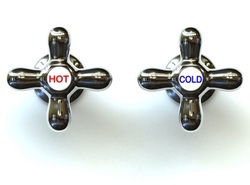
Warm Water is great because:
Unfortunately it also makes hair look more frizzy! Therefore, it's great for the beginning of the washing process. Don't use hot water on your hair though! Hot water:
Cold water is great because:
Therefore, it's important to finish your hair wash off with cold water - I also do this for my face. Rinsing your face off with cold water helps to reduce acne (obviously in addition to drinking lots of water and trying to eat well) this is similar to sealing off the hair cuticle with cold water. In summary, cold water pores and cuticles to shrivel up warm water makes them open up. 
 Click for Queen Lana's hair styles, journey & regimen Click for Queen Lana's hair styles, journey & regimen
Product build-up not only makes your hair look dirty but by clogging up your scalp, it could also be messing with hair growth.
If you have an itchy scalp, build-up could also be the reason. Here are five things you can do to stop product from building up on your hair: 1. Watch the grease! You don't need to grease your scalp to prevent dryness. Massage it with a good quality vegetable oil every other day to stimulate growth. If you're using an oil that isn't too thick and dense, e.g. coconut oil or jojoba even a daily scalp massage with a little oil won't clog the scalp up. 2. Avoid petrolatums Avoid petrolatum-based products; anything that has the texture of vaseline is too heavy and contains too much petrolatum. Vegetable butters and oils will do much more for you in the long-run. 3. Wash regularly Wash your hair at least weekly. This also helps to keep your hair softer. Personally, I think once every two weeks is not often enough although I have to admit I do sometimes get lazy and get to that point. 4. Don't go no-poo Shampoo is necessary to get rid of dirt, old oils and build-up. Like it or not, even good ingredients like oils and butters will build up over time and you can't wash those out with a conditioner or with water only. Just get a good quality, mild shampoo. 5. Keep it simple You don't have to use every product under the sun on your hair and especially not all at once. Get to the point where your dresser only has a max of 6 bottles for hair:
Have I missed anything? Feel free to chime in.
 Credit: blackandkillingit.com Credit: blackandkillingit.com
Lucky are those, like my husband, that can just go into the shower and wash their hair in any way without any consideration for tangling. For the rest of us, we need a technique; more especially when hair grows beyond shoulder length. This is my shampoo methodology:
Techniques for reducing tangles:
1. Wash your hair in twists. If your hair is longer than shoulder length it should already be in twists to prevent re-tangling. This keeps the hair strands together and stops errant strands from getting tangled around their neighbours. This technique is optimal if you're washing your hair bent over a bath tub as the action of bending forwards and then standing back up increases the rate of tangling. It's also best for medium to long hair. 2. Keep your hair flowing in a downward direction. This technique is easier if you have a shower whose head you don't have to hold up! Wash your hair with your hair held upright to stop the strands from moving about and getting tangled. This is such simple advice but it actually works! If your hair is in twists then this is not that important. 
 Click For Queen Naa's Journey Click For Queen Naa's Journey
If your shampoo is too thin there are two ways you can thicken it.
I used to use xanthan gum but it can be hard to work with so I upgraded to crothix. pH Your shampoo should have a pH between 5.5 and 6.0. To achieve this use citric acid. Add 0.5% (0.5g for a 100g recipe) at a time until you reach your desired pH. Citric acid is very widely available because it's used commercially to adjust the pH of food and cosmetics. How To Adjust Shampoo pH With CitiricHow To Make A Shampoo Thicker: Xanthan Gum vs. Crothix Vs. Salt

Yes, it appears you can wash your hair with body wash with no harm, in fact, it could be milder than shampooing with a a sulfate-based shampoo.
Shower gels are formulated to have milder surfactants than shampoos. Therefore, if you have a shower gel that makes your skin feels soft and conditioned rather than squeaky clean, you can absolutely use it as a shampoo. It is quite similar to using a 2-in-1 shampoo. Should you do it? I haven't tried it yet but next time I am on holiday and can't find a sulfate-free shampoo I might just got for it! 
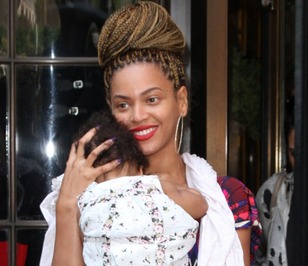 Classic box braids. Classic box braids.
Yes, but not indefinitely!
Most of the benefit of regular conditioners comes from the stuff that coats your hair. These ingredients are designed to coat hair so that it looks more shiny and strengthens hair from the outside. That said, many products that are designed specifically for natural black hair recognise the fact that our hair is weaker so they include more ingredients that adsorb (penetrate) into hair and strengthen the hair fiber from the inside. This is especially true of deep conditioners. That said, this penetration process will happen within 20 to 30 minutes. Keeping the conditioner on for more than 30 minutes will have no added benefit whatsover. Let me explain it another way: you know when you have wilted salad leaves in the fridge? When you immerse the leaves in cold water they water goes into the leaf and it starts to look more solid again. They look fresher and can be served. After that point (when the leaves are "turgid") keeping the leaves in the water for longer has no benefit whatsoever. In fact, if it's a hot day those leaves will start rotting right there in the water! The key with using a conditioner is to make sure that it is evenly spread over all your hair.
In summary, if you leave your conditioner on your head for hours and hours there is no added benefit whatsoever. If you're like "but it feels softer" that has nothing to do with the conditioner, it's just the moisture. If you rinsed all the conditioner off and put a shower cap back on you would get the same result!
|
I now blog about wealth creation - so if you have any money questions meet me there, you can do all sorts of cool things like leave me a voicemail.
By Heather Katsonga-Woodward
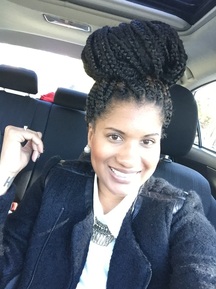
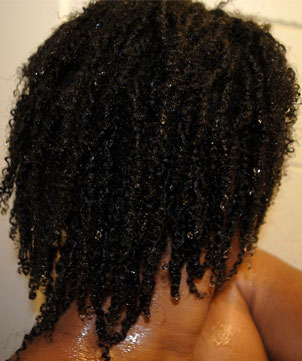
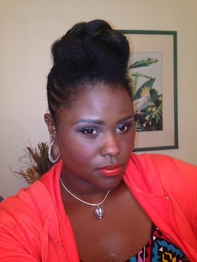
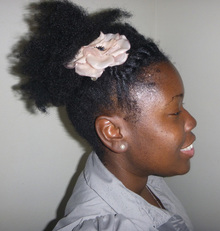
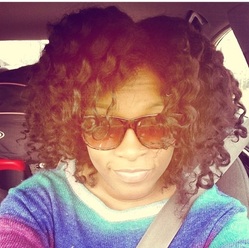
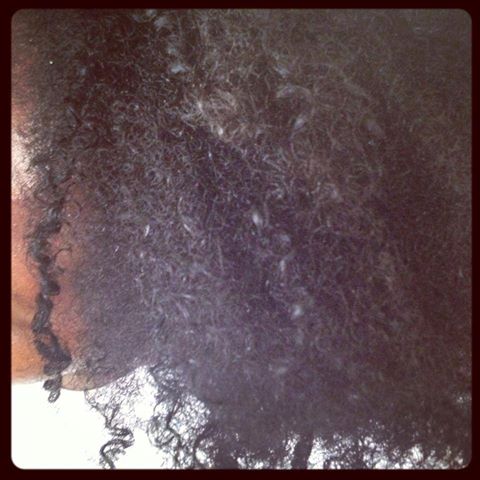
I was a natural hair blogger and mixtress living between London & Chicago from 2012 to 2017. I always thought I was 4C but some say 4B; images below - you decide! Heather xx
Categories
All
Click for free eBook!

Check out the podcast!
Archives
November 2016
|